Pirollo Chiropractic

Pirollo Monroeville Chiropractic Center

Call Now (412) 372-4192
  • Home
  • Services
    • Massage
  • Meet Our Team
  • Contact
  • Blog

Shoulder Sport Injuries and Chiropractic Care

1361740537_7c6bbebfceAthletes and sports enthusiasts suffer from different sports injuries, the most common one being shoulder injuries, contracted during the strenuous activities and efforts required during various sports. Chiropractors provide effective treatment methods to rid the patients of the pain and suffering of a shoulder injury.

How Are Shoulder Sports Injuries Contracted?

Shoulder sport injuries are contracted by professional athletes and individuals who pursue a certain sport as a hobby. The strenuous and exhausting practice procedures, along with the constant exertion on the body, result in acute muscular pains in the arm and shoulder regions, for the sports professionals. In extreme cases, the pain spreads throughout the entire arm, causing sore and stiff shoulder muscles and tingling pain up to the fingers.

The sports which require extensive physical effort like basketball, baseball, football, etc., require the players to engage in different repetitive movements, which sometimes cause shoulder sport injuries.

Symptoms of Shoulder Injuries

Shoulder injuries which are very common among sports athletes and professionals present certain symptoms and signs which help in the diagnosis of the form of injury. A patient with a shoulder pain which persists for a couple of days has a high risk of suffering from a shoulder injury which needs to be treated promptly.

Recurring episodes of shoulder pain is also a sign of a shoulder injury, while inability to carry objects highlights the extent of damage suffered by the shoulder of an individual. In extreme cases, the shoulder injury causes a deformity in the joint and damages the muscles of the shoulder, which leaves the individual in extreme pain.

Shoulder injuries also include bruises and swellings around joints or the arm region of the body, which results in stiff muscles that are difficult to move. In some cases, the patient suffers from a fever and swelling with an infection, if there is acute damage to the muscles and joints of the shoulder region. Some individuals also face difficulty in moving their injured shoulder and experience pain in the area throughout the day.

Treatment Options

Shoulder injuries require prompt and efficient medical treatment, carefully administered, to ensure that there are no further damages to the injured area. Rest and anti-inflammatory medicines are prescribed by doctors to bring down the swelling in the shoulder. Various painkillers are prescribed which only serve to alleviate the pain for a short period of time. Chiropractors provide effective treatment for the shoulder sports injuries contracted by different individuals.

Image used under Creative Commons Licensing: Mikko with dislocated should… by Aleksi Aaltonen

Why Spinal Surgery is a Bad Idea

Illu_vertebral_columnBecause it takes the smallest mistake to permanently paralyze a healthy individual, a fact that any chiropractor will attest to. There is always a risk of injury involved in spinal surgery.

Almost 80% of the people in the country will complain about lower back pain at some point in their lives. More work days are missed because of spinal pain than any other sort of ailment. This also places it as one of the most common causes of disabilities right after cardiovascular disease.

However, most people would rather seek the services of certified chiropractors than their doctors. Doctors usually prescribe numbing medication or painful surgical procedures like spinal surgery for patients who complain of repetitive chronic pain. But that is hardly a permanent solution and also involves a great deal of risks.

What can go Wrong:

Transitional Syndrome

Perhaps one of the most interesting aspects of the spine has to do with its behavior. Your spine behaves like a chain of repeated segments. Each of the individual segments works as a whole to share the workload that is involved in moving the body by sharing the load along the spinal column. In other words the stress that is imposed on the spine during the movement is shared amongst the segments.

However such a process can only happen seamlessly when the spine is healthy. When one or more of the segments doesn’t work as they should their neighboring segments have to pick up the slack and work harder. The segment that is closest to the dysfunctional one gets most of the stress. This means that the area near where the spinal surgery was performed takes on more stress.  This is what is known as transitional syndrome since it occurs due to the transition of a healthy area of the spine to the fused area.

General practitioners and even orthopedic surgeons can never claim to know what causes pain in the back. To them, complex procedures like spinal surgery appear as handy default treatments. This is not to mention the disastrous residual pain that is caused by inappropriate surgery. Such a complication is more of a possibility after common spinal surgeries, such as laminectomies, in which a disc is removed to give the nerve near the central spinal cord more space to move, or fusion, in which a vertebra is surgically joined to another to restrict excess movement.

Image used under Creative Commons Licensing: Illu vertebral column.jpg

Understanding Ergonomics – How Seat Design Plays a Vital Role

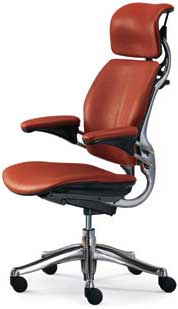
FreedomChairIt is estimated that at least 50% individuals in the industrialized world suffer from some kind of back problem, most notably due to a poor or inadequate seat design. How we sit all day in front of our workstations has a marked impact on the overall health of our spine. As a result of bad posture, the lumbar region in the back bone is what takes the most pounding. Here’s what you need to know, and many chiropractors will stand by it.

There is no universal seat that’s designed to accommodate every single person. But there are a number or ergonomic factors that come into play when we’re talking seat design. These generally work well for the average person.

Seat height should be set in a way so as to support a knee angle of 90 degrees. This takes undue stress off the thighs and buttocks. A chair that’s too high will increase the pressure at the underside of the knees, reducing blood flow and increasing unnecessary pressure on the nerve.

A chair that’s too low places pressure on the ischial tuberosities – this is where the upper thigh originates in the gluteus maximus region. Normally, the glutes cover them in the upright position, but they are exposed and at an ergonomic disadvantage when we’re sitting.

Optimal seat depth is recommended at 16.5”; between 14” and 18.5” for adjustable seats.

You should avoid hard seats. Seat pan contouring and cushioning should be designed in a way so that pressure is distributed over a larger area and the pelvis rotates forward – this encourages better posture.

Ideal seat cushioning is about 2” thick. The cushioning needs to be firmer and thicker in the back, while being less firm and thinner at the front. Too much cushioning and your body is going to sink into the chair, restricting movement. A soft chair may be very welcoming and comfortable at first, but it goes against basic ergonomic sense; as the body sinks, blood flow is reduced and skin temperature rises as you experience more compression under the thighs. At the end of the day – more discomfort.

A seat width that’s between 20” and 23” generally works well.

An ideal seat angle helps you maintain good contact with the backrest; a 5 to 10 degree angle is good.

There many more ergonomic factors related to optimal seating, and these are just some of them at a glance. A good chiropractor can help you determine exactly what type of chair best suits your body type.

Image used under Creative Commons Licensing: FreedomChair.jpg

Introduction to Chiropractic

images (8)What is Chiropractic?

Being a type of manual therapy, the practitioner utilizes techniques, forces and manipulations that are administered chiefly by hands. The spinal cord is the center of all therapies for a chiropractic doctor. Their belief is that the spine is the central structure as it allows messages from different parts of the body to reach the brain and vice versa. Under the state of paralysis in any part of the body, it is the spinal cord that can make any limb completely nonfunctional.

Spine Manipulation

Keeping the vitality of the spine in mind, D. D. Palmer brought to life the concept of spine manipulation to deal with vertebral subluxation. It is the practice of applying varying amounts of force to the area of concern in the spine to restore normal functioning.  Palmer is popular for applying this technique to a deaf individual (deafness not present at birth) and being successful at restoring his hearing capabilities.

Subluxation

Primarily a chiropractic practitioner deals with a vertebral subluxation. A subluxation is when the spine loses its normal positioning and the neural pathway dysfunction causes a compromise in the functioning of several different parts of the body including the visceral system. A subluxation occurs as a result of a trauma, injury or even a chemical imbalance in the body.

Chiropractic’s Forte 

A thorough examination is undertaken before your doctor performs any chiropractic techniques to relieve your pain. Several conditions are beyond the realm of this care. If you have a neurological condition, then you will be recommended to a neurologist and will not be administered any care procedures under a chiropractic practitioner. Other such conditions that cannot be dealt with manual therapies include tumors, broken bones, osteoporosis and arthritis. Areas that can be called its forte are pain in the upper and lower back, neck pain, and headaches, minor injuries related to sports, asthma, tennis elbow, frozen shoulder, menstrual pains and the like.

Neck pain

This is said to be the second most valid reason for paying a visit to a chiropractic practitioner. However, neck pain can be caused by a variety of reasons. Several of which can be dealt with utilizing chiropractics. With cervical disc degenerative diseases, pinched cervical nerve, minor injuries to ligaments, herniated disc disease and the like, chiropractic can be very effective.

When the neck becomes an area of concern, several other parts of the body can suffer the impact. Weakness in the arms, shoulders and hands, the tingling sensation in parts of the body supplied by the neck suffer along with the pain in neck. Therefore, dealing with neck pain with the help of a chiropractic practitioner is a wise decision.

Image used under Creative Commons Licensing: Spine and Disc Herniation by Michael Dorausch

Spinal Disc Herniation – Disc Injuries and Chiropractic Therapy

290644114_fa50ce417a (1)Spine and disc injuries are more common in individuals who lie in the 40 to 60 age bracket. While young individuals who engage in different strenuous work activities (which involve the lifting of heavy loads and operating on machinery for long hours) experience spine, neck and disc injuries which cause great pain. These injuries cause hindrance in the movement of the back and the neck, and are aggravated by continuous involvement in different laborious activities. Spinal disc herniation is a medical condition experienced by individuals because of over-exertion on the back and neck parts of the body. Chiropractors offer different treatment methods to relieve the pain and facilitate movement of the affected individual.

What Is Spinal Disc Herniation?

Spinal disc herniation is a medical condition in which a tear appears on the outer fibrous layer of the vertebra disc, which causes the inner soft nucleus material to bulge and squeeze out from the torn area of the disc.

The tear in the disc is usually attributed to old age in individuals, but may also be caused because of any trauma, straining and lifting injuries, experienced by a young individual, because of different work related and other everyday activities. The nature of the tear in the disc might cause inflammation in the surrounding area, which might put pressure on the nerves, resulting in pain for the individual. The bulging out of the inner pulpous material from the ruptured or torn disc results in a pressure on the spine and disc which causes extreme pain.

Spinal disc herniation is also called a slipped disc condition, though the disc is securely intact in between the vertebra. Individuals suffering from a minor case of spinal disc herniation are able to recover within a few weeks, with suitable rest. But, in cases of extreme damage to the spinal disc, the patient sometimes requires surgical treatment, which does not always provide good results.

Patients with acute spinal disc herniation in the upper, central or lower part of their spinal cord require physical therapy and medications for quick recovery.

Chiropractic Therapy for Spinal Disc Injuries

Chiropractors provide treatment and therapy for the effective recovery of individuals suffering from different forms of spine and disc injuries. They mobilize and manipulate the muscles of the spine and the neck, adjusting the different joints and muscles, to relieve the individual of the excruciating pain experienced because of the different musculoskeletal disorders.

Image used under Creative Commons Licensing: the neck thing. ouch. no really…ouch! by Beth Punches

  • « Previous Page
  • 1
  • 2
  • 3
  • 4
  • …
  • 11
  • Next Page »
Pirollo Chiropractic (412) 372-4192
3940 Monroeville Blvd Suite 201 Monroeville PA 15146
Pirollo Chiropractic
Contact Us
3940 Monroeville Blvd, Suite 201
Monroeville, PA 15146
(412) 372-4192

https://chiropractormonroeville.com
Hours
Monday
Tuesday
Wednesday
Thursday
Friday
10:00am - 7:00pm
12:00pm - 3:00pm
10:00am - 7:00pm
Closed
10:00am - 7:00pm

Connect With Us

  • Facebook
  • Pinterest
  • Twitter
  • YouTube
Zocdoc Patients Book Here:

Pirollo Chiropractic

Privacy Policy

© 2026 Pirollo Chiropractic - Powered by GotchaLocal.com