Pirollo Chiropractic

Pirollo Monroeville Chiropractic Center

Call Now (412) 372-4192
  • Home
  • Services
    • Massage
  • Meet Our Team
  • Contact
  • Blog

Lumbar Disc Condition

images (24)What is Lumbar Disc Herniation?

Structure

The backbone is comprised of several discs that are fixed between two vertebras. The spongy material can be compared to a jelly donut, which has an outer cover and is filled with a soft jelly on the inside. Similarly, a disk has a strong outer covering and a soft substance as a filling.

The Leak

Several times the outer coating of the disc is ruptured, causing an opening for the inner jelly like substance to seep out. Once out of its protective outer laying, the leaked material interferes with the normal functioning of the spinal nerves. The already narrow spacing of the spine, through which nerve roots runs, is narrowed further and puts pressure on the nearby nerves.

Lumbar Specific Herniation

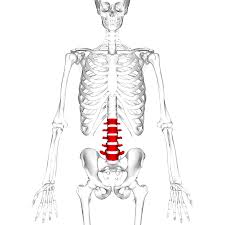
Lumbar region is found in the lower back and is considered to be the strongest area of the spine. It is said to bear a large portion of the weight of the body. Sciatic nerve is said to be a conglomeration of nerve roots running down from the lumbar spine. Therefore, lumber disc injuries can cause pain in the legs and feet.

Symptoms

As the lumbar region is strongly associated with the leg and feet area, one of the significant signs of lumbar disc injuries includes pain in the legs. Another symptom common to this condition is the tingling sensation in the feet. Feet might also feel weak and numb at times following a lumbar disc herniation.

The lumber region falls in your lower back area, therefore lower back pain is another common sign and symptom. Almost every body part below the lumbar region easily gets affected by lower back disc injuries. A weak bladder or loss of control of bowel movement and pain in the buttocks are considered to be symptoms of this condition as well. Other common indications include muscle weakness, groin pain as well as atrophy.

Visiting a Chiropractor

Considered to provide a conservative treatment, chiropractors can alleviate lumbar disc injuries. A case study of a 26 year old man is a validation for the success of recovery associated with visiting a chiropractor.  Within a period of 90 days, the patient, who suffered from a lumbar herniated disc due to an athletic injury, completely recovered from the condition. Utilizing activator adjustment instrument (AAI), a controlled mechanical force was applied to the location of concern. A follow up after 12 months indicated successful long term recovery.

Image used under Creative Commons Licensing: Lumbar vertebrae anterior.png

Successful People Never Say:

6092105212_f625893db6_z

How Can You Become One of the Successful Types?

I once interviewed a woman who told me about how she turned her life around, moved from a dead-end job into a fulfilling life of helping other people. As I spoke with her I was struck with the similarities in stories that I’ve heard from a number of successful people. “I had to break away from my old friends and coworkers because to them, this was life. There was no other. And I knew that my life was a whole lot more than waiting tables in a little cafe.” Successful people are very different from unsuccessful people. People who are stuck in their rut tend to repeat the same things over and over. Successful people avoid saying these things at all cost.

1. “Not Possible.” This is the battle cry of the unsuccessful. The believe that if they can’t do it, then no one can. On the contrary, successful people haven’t met a challenge they aren’t willing to meet. The successful person has a never-ending “can-do” attitude that carries them from one success to the next.

2. “I’ll Do it Alone.” This is what people say when they don’t trust anyone else to do what they believe they’re best at doing. They can’t delegate. They can’t see the whole picture objective. In the end they will wind up slowing down the entire project and leaving you in a lurch because you needed their input last week and they won’t be done until next week.

3. “The Devil’s in the Details.” Another description for a nitpicker. This is the person who has an ax to grind, or a pet peeve they need to vent about, usually in as public a forum as possible. They have no intention of furthering the project, they want, even need the limelight on themselves in order to feel important. And the more they do it the more they need it because they couldn’t declare how unsuccessful they were any better.

4. “My Idea is Better.” Working as a team, to have one individual continually insist that their idea is the only one that will work says you either have a genius in your midst or you’re working with a chronic failure. The team member who believes that their idea is the only one that will work is short-sighted and a potential problem. No one is able to consider all possibilities, which makes working as a team a successful proposition.

5. “I know. I know.” When you’re a know-it-all, you proclaim to the world that you don’t. It means you’ve stopped growing, stopped learning and this is as far as you are going to go. You believe that you’re showing everyone how smart you are, but the real message to other successful people is that you have your own agenda and that is it.

Check yourself for any of these self-limiting behaviors. In order to be continually successful, you need to be open to the ideas of others and willing to see where you might have made a mistake. It’s OK, everyone makes them. Only successful people admit and learn from it.

Photo Credit: Interview Questions via Matthew Hurst at Flickr

Blood Clot, Who Me? Never!

8346095057_9d01a36d6e_z

That WON’T Be Me

So you say…until you get one.

Did you know that anytime you travel, whether by plane or automobile, if you’re traveling longer than two hours, you’re at significantly higher risk of developing a blood clot.

My first exposure to the dangers of a blood clot was on a reality television show. No, I wasn’t on it…I was watching it. It didn’t appear for more than a single season I think, but fascinated me. People traveled from all over the world to man and sail an old ship from the 1800s. As a history buff, I was fascinated with everything they had to do in order to stay true to the time period they represented.

That is until one of the crew members went to seek help from the ship’s doctor. “I’m having a little trouble breathing.” The patient was a young man in his late 20s, seemingly in excellent health, but he was having pain in his chest.

Thinking it was part of the show, I began to wonder, what could be causing his discomfort? What diseases afflicted the people sailing ships during that era?

I was wrong. I was very wrong. It’s a good think the doctor on their ship was knowledgeable and knew that her patients were not 1890s sailors, but 21st century reality show participants who traveled a great many miles to get to Australia where they gathered.

All I remember about the patient is that he did NOT want to lose his place on the crew. He had worked long and hard to be selected for his task and he was determined to see it through. If only he could breathe.

As time went on, I began to become uncomfortable. As a television viewer, I was perfectly safe. But I had enough empathy and compassion to know that their satellite phone only worked sporadically and the doctor was worried.

She had every right to be.

Her patient was suffering from a pulmonary embolism, a blood clot in his lungs. It developed as a result of his flight to reach Australia the week before. And without immediate medical attention, the man would die. So, out with the 1890s reality, in with modern medicine. The man was taken off the ship by helicopter and taken swiftly to the nearest hospital where he was treated for a blood clot.

This is a much more common problem than you might think. The likelihood is still less than one-tenth of one percent, but for those who experience, it really is a matter of life or death. Travelers need to be aware that the more time they spend on an airplane, the greater the likelihood of them developing a blood clot. Take regular breaks to stretch, walk around, move in any way you can. Learn how to do chair calisthenics so that even if you’re trapped in a window seat you can mitigate the likelihood of getting a blood clot because of your travel experience.

Photo Credit:
The Travel-House
via Shena Tschofen at Flickr

Disc Injuries -Thoracic Disc Herniation and Chiropractors

290644114_fa50ce417aThe demanding activities and tasks at the workplace and the lifting of heavy objects at home, causes pain in the back and neck region of the body, which if not treated appropriately, can result in serious disc injuries. Thoracic spine herniation is a medical condition, for which chiropractic offers effective treatment methods.

What Is Thoracic Disc Herniation?

Thoracic disc herniation is a type of disc injury in which the upper back region of the body is affected and a tingling pain permeates throughout the affected area. In some cases, the patient might feel pain in his chest and rib cage, which might be because of the pressure exerted on the nerves in the area.

The thoracic spine of the body consists of 12 vertebra, referred to by doctors as T1 to T12. The thoracic spine begins at the base of the neck, and continues until the end of the rib cage, where the T12 vertebra joins with the first vertebra of the lumbar region.

Thoracic disc herniation is a medical condition caused by the bulging or swelling of the pulpous and nerve material, located in the center of the disc. The material squeezes out of its narrow space and becomes exposed. The pressure exerted by the disc on the exposed nerves causes extreme pain to the individual which hampers him in engaging in different everyday activities.

Disc generation is also a probable cause of thoracic disc herniation, as the disc experiences wear and tear due to age and strenuous usage. This medical condition is more likely to develop in individuals who are in the 40 to 60 year age bracket.

Medical professionals conduct MRI scans in order to determine that there is no pressure and damage to the spinal cord because of the degeneration of the disc. In extreme cases, where the herniated disc exerts pressure on the spinal cord and the nerves, an individual can even suffer from a paralysis in the lower region of the body.

If the disc herniation is more to the side, it might cause pressure or impingement on the nerve root, causing pain in the abdomen and chest walls. In other cases, the pressure on the nerves might cause a combination of different symptoms ranging from upper back pain to tingling sensations all down the spine.

Chiropractic and Disc Injuries

Chiropractic offer non-invasive treatment methods for different spine, neck and disc injuries. They provide services for joint adjustment and relief from various musculoskeletal disorders.  Chiropractic is gaining popularity for effective treatment of different painful muscle strains and disorders.


Image used under Creative Commons Licensing: the neck thing. ouch. no really…ouch! by Beth Punches

Chiropractic for Whiplash Associated Disorder (WAD)

8274285848_a550a961f8_oThe Basics of Chiropractic

Chiropractic involves a hands-on treatment of musculoskeletal concerns by focusing on the structure of the body and paying close attention to the spine. Adopting a high velocity low amplitude (HVLA) therapeutic stance, it is a popular choice for problems of back and neck pain. A high velocity low amplitude (HVLA) involves a short but quick thrust of pressure to a selected skeletal joint.

Chiropractic and the Neck

Several studies indicate the effectiveness of this technique for alleviating neck problems. When seventy patients underwent different treatments for their neck pain, with a handful of them receiving the chiropractic HVLA manipulation, results indicated the success of HVLA thrusts in reducing neck pain when at rest and increasing the range of cervical motion.

Whiplash Associated Disorder (WAD)

Causes

Car accident is the most common cause for a WAD. At the time of a motor collision, the body is unprepared to save you from the sudden jerk. A sudden head movement results in an acceleration and deceleration of the neck. This can lead to several different types of injuries, ranging from minor strains to permanent damage.

Spillover Effects

When the soft tissues, ligaments, nerves and muscles in the neck suffer any injuries, the pain diffuses through to the shoulders and the upper arm. Several people also suffer from neck stiffness after reading in bed at a stretch. Neck pain can also be caused by a bad posture or an extended period of severe mental stress.

Treatment

Neck related concerns are one of the main reasons people opt for chiropractic care. If WAD is not cared for, it can result in long term health related issues such as severe aches and soreness in the neck. When under chiropractic care, manual therapy is utilized where force is exerted physically to treat the joint structures and tissues for ease and relieve the pain.

With the use of tables that are highly specialized, the patient is made to comfortably lie down and the HVLA manipulation is adopted. The techniques involve applying a specific amount of force to the area of concern or by holding the client’s head to rotate it. Controlled and careful rotation of the neck can lessen the pain, eventually curing the neck condition. Mostly it is advisable to not rotate the neck more than 50 degrees.

During the procedure the patient can either be seated on a stool or might be asked to lie on a specialized table. The table comprises of cushions enabling the patient to lie down in a comfortable position. Based on the severity of the whiplash, the practitioner massages the neck in the direction of the stiffness.

The above is a brief overview of how chiropractic practitioners adopt techniques to reduce neck pain cause by a WAD.

Image Used under Creative Commons license. Photo Credit: Whiplash by Narih Lee

  • « Previous Page
  • 1
  • 2
  • 3
  • 4
  • 5
  • …
  • 11
  • Next Page »
Pirollo Chiropractic (412) 372-4192
3940 Monroeville Blvd Suite 201 Monroeville PA 15146
Pirollo Chiropractic
Contact Us
3940 Monroeville Blvd, Suite 201
Monroeville, PA 15146
(412) 372-4192

https://chiropractormonroeville.com
Hours
Monday
Tuesday
Wednesday
Thursday
Friday
10:00am - 7:00pm
12:00pm - 3:00pm
10:00am - 7:00pm
Closed
10:00am - 7:00pm

Connect With Us

  • Facebook
  • Pinterest
  • Twitter
  • YouTube
Zocdoc Patients Book Here:

Pirollo Chiropractic

Privacy Policy

© 2026 Pirollo Chiropractic - Powered by GotchaLocal.com